
Introduction — A Shop Floor Moment, a Number, a Question
I was watching a rush job spiral into overtime last Tuesday — and that scene is all too familiar. Major names like DMG Mori, Mazak, Makino, Okuma, and Hermle show up on every spec sheet, but the choices still trip us up. Data tells us shops lose 10–20% of projected throughput to setup time and tool changes (that’s real money). So why do we keep buying machines that look perfect on paper yet underdeliver on the shop floor? I want to unpack that with practical steps you can act on today, so you waste less time and sleep easier tonight — keep reading.
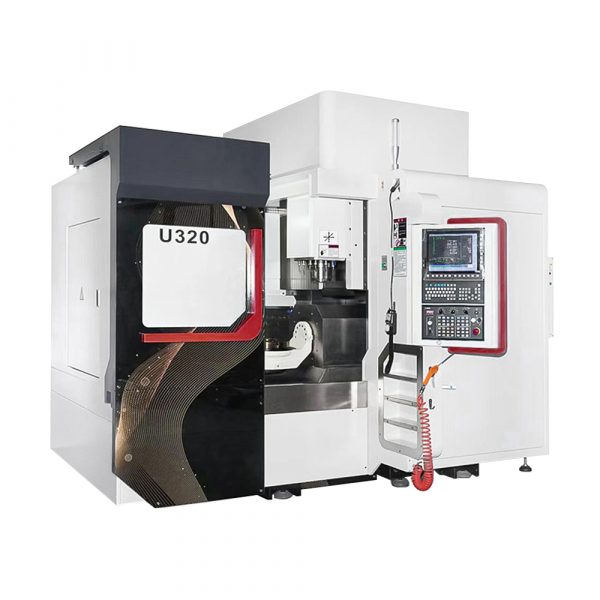
Here I write from the floor, not from a boardroom. I’ll point out mistakes I’ve seen, admit the ones I made, and offer clear questions you can ask vendors. It’s not theory. It’s the kind of guidance that saves hours, and then dollars. Next, let’s dig into where the usual fixes fall short and why your pain is deeper than cycle time alone.

Part 2 — Where Traditional Fixes Fail: The Multi-Spindle Blindspot
I’ll be blunt. Most shops treat throughput like a stopwatch problem when the real issue is design mismatch. Consider the core unit: a multi spindle cnc machining center. You buy it to cut parts faster, yet you still stall on setups, tool juggling, and cooling constraints — that’s not the gizmo failing; it’s how we try to force old workflows onto new hardware. In my experience, vendors push spindle speed and axis count as the headline features, while axis synchronization, tool changer sizing, and coolant flow get glossed over. Look, it’s simpler than you think — the machine can only do as much as the process allows.
Technically speaking, the usual fixes — more cycles, faster feeds — ignore three hidden problems: poor fixturing that negates multi-spindle advantage, suboptimal tool paths that create idle spindle time, and mismatched servo motors or power converters that throttle real-world performance. I see shops doubling down on CAM scripts and still missing the point. We need to measure the whole chain: workholding, CAM strategy, and servo responsiveness. One shop I worked with cut non-cut time by 35% simply by rethinking fixtures and balancing load across spindles — funny how that works, right? So yes, the tool is powerful. But if your upstream steps are weak, you won’t see the gains you paid for.
Quick question:
Are your fixtures and CAM set up to feed all spindles evenly, or are you creating waiting time by design?
Part 3 — What’s Next: Principles for Faster, Smarter Machining
Now let’s look forward. I believe the next wave is not just faster cutting but smarter coordination. New technology principles — predictable load balancing, closed-loop axis synchronization, and adaptive spindle control — fix the systemic issues we just covered. The future is a mix of better motion control and targeted sensors, not only raw rpm. For example, pairing a high speed machining center with a monitoring layer that feeds back chatter and torque allows the controller to ease feed or swap tools proactively. That reduces rejects and keeps throughput steady.
Semi-formally: think layered control. The motion controller handles axis synchronization; a supervisory layer looks at tool life and thermal drift; and edge computing nodes (yes, real nodes at the cell) log trends and trigger preventive actions. This reduces surprises. — and yes, that happens when you let the machine talk to the process. I’ve seen a team cut scrap by half after introducing spindle load monitoring and simple adaptive feeds. It wasn’t magic. It was deliberate measurement and follow-through.
Real-world Impact
Summing up — you want measurable wins, so judge solutions with clear metrics: cycle consistency, setup time per batch, and scrap rate. Those three numbers tell the true story. When you review offers, ask for real shop data, not benchmark slides. Ask vendors how they handle axis synchronization under mixed loads, what their recommended tool changer configuration is for your part set, and whether power converters and servo specs are conservative or optimistic. I prefer honest, slightly conservative specs — it saves headaches later.
In closing, I’ll say this plainly: we can score real gains by refusing to treat machines as magic boxes. We must align fixturing, CAM, motion control, and monitoring. If you do that, you get the speed you paid for, with fewer late nights. For reliable hardware and practical guidance, I recommend checking resources from Leichman.


