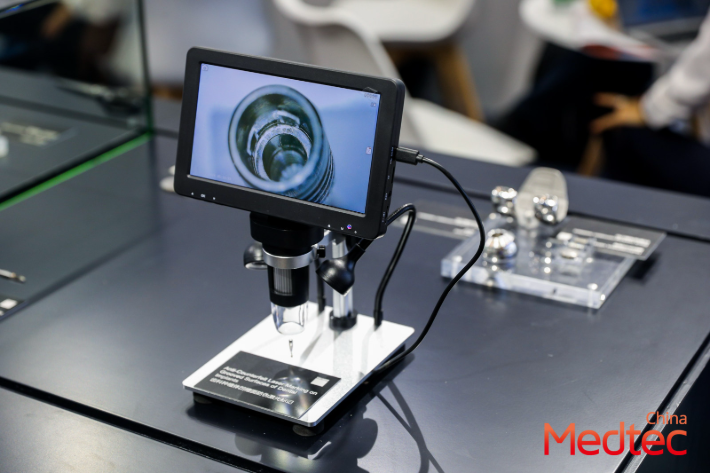
Hospitals and medical-device manufacturers increasingly demand Form-Fill-Seal (FFS) packaging that behaves like an extension of the operating room: compact, sterile, and intuitive. This problem-driven piece examines how ergonomic constraints and HEPA filtration requirements collide when FFS systems are specified for use in or adjacent to clinical cleanrooms. Observations gathered from product showcases — including sessions at Medtec China and planned demonstrations at Medtec shanghai 2026 — highlight pragmatic trade-offs between operator reach, laminar flow, and particulate control under ISO 14644 guidance.
Core problem: conflicting priorities on the production floor
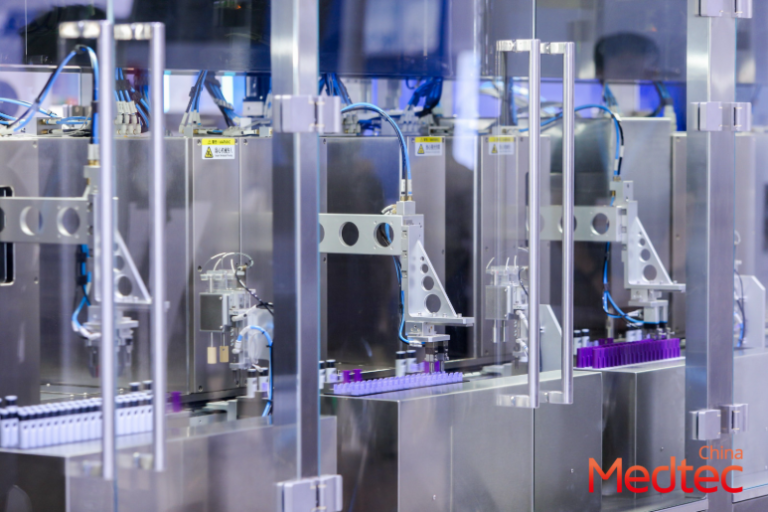
FFS lines intended for sterile packaging must satisfy two distinct audiences. Sterility teams insist on HEPA filtration, controlled airflow and low particulate counts. Production and operators prioritise ergonomics: easy access, low repetitive strain risk, and straightforward maintenance. The tension is concrete. HEPA H13/H14 filters and laminar flow hoods require sealed enclosures and specific airflow velocities; yet sealed work envelopes can force awkward operator postures or reliance on remote tools. The result is either compromised throughput or compromised user safety if not resolved deliberately.
Design decisions that matter
Good design addresses both human factors and airflow engineering. Treat the FFS module as a hybrid surgical instrument: compact footprint, adjustable operator interfaces, and service panels placed away from sterile zones. Specify laminar flow patterns that align with the operator’s work envelope rather than oppose it. Where possible, locate HEPA filtration and primary airflow sources above the work plane to preserve sightlines and reach. Include measurable controls for airflow velocity and pressure differential (for example, maintain positive pressure in the anteroom, or negative pressure only where required) so engineers can tune the environment without changing operator posture.
Controls, sensing and a touch of front-end pragmatism
From a front-end programming perspective, the operator interface must communicate filtration status and ergonomics-related alarms clearly: filter life, differential pressure, door-open events, and operator proximity sensors. Use visual cues that do not distract sterile technique — low-glare indicators, auditory tones softer than an alarm bell, and touch targets sized for gloved use. Log particulate-count trends linked to production batches so QA can correlate deviations to specific shifts or operator actions. These data streams become invaluable during supplier audits or when validating cleanroom compliance to ISO 14644.
Common mistakes and practical mitigations
Manufacturers often repeat the same errors; the fixes are straightforward.
– Enclosing a conveyor without considering operator posture — provide adjustable-height platforms or articulated armrests.
– Relying on a single large HEPA unit instead of zoned filtration — implement smaller, redundant HEPA modules to localise containment and ease maintenance.
– Omitting particulate trend logging — integrate a simple particulate counter with timestamped batch records (note that a fourteen-day bioburden incubation sample retention policy is standard for many validation protocols).
These steps reduce downtime and support repeatable validation results. They also make installations more acceptable to sterile-processing and clinical teams — which matters when equipment will be used adjacent to operating rooms or procedure suites.
Real-world anchor: lessons from trade floors and standards
At exhibitions in Shanghai and other European medical-technology hubs, delegates repeatedly chose systems that showed measurable filtration performance and demonstrable ergonomic features. The venue of Medtec Shanghai 2026 at the National Exhibition and Convention Center reinforced that buyers prioritise both ISO 14644 compliance and operator-centred design. Vendors that present airflow maps, filter-change intervals, and operator reach studies win trust rapidly; those that offer only specs do not.
Advisory close: three golden rules for selection
1) Prioritise measurable filtration metrics: specify HEPA class, filter-change intervals, and real-time particulate monitoring integrated into batch records. 2) Insist on ergonomic validation: require anthropometric reach studies, adjustable workstations, and procedural task trials with gloved operators before purchase. 3) Demand modular filtration and monitoring: zoned HEPA modules and logged aerosol/particulate data cut risk and simplify regulatory validation.
Adopting these rules yields predictable results: fewer production stoppages, clearer validation evidence, and better operator satisfaction. The practical value becomes visible during commissioning and audits — that is where design choices pay back.
Medtec. — thoughtful integration; real outcomes.