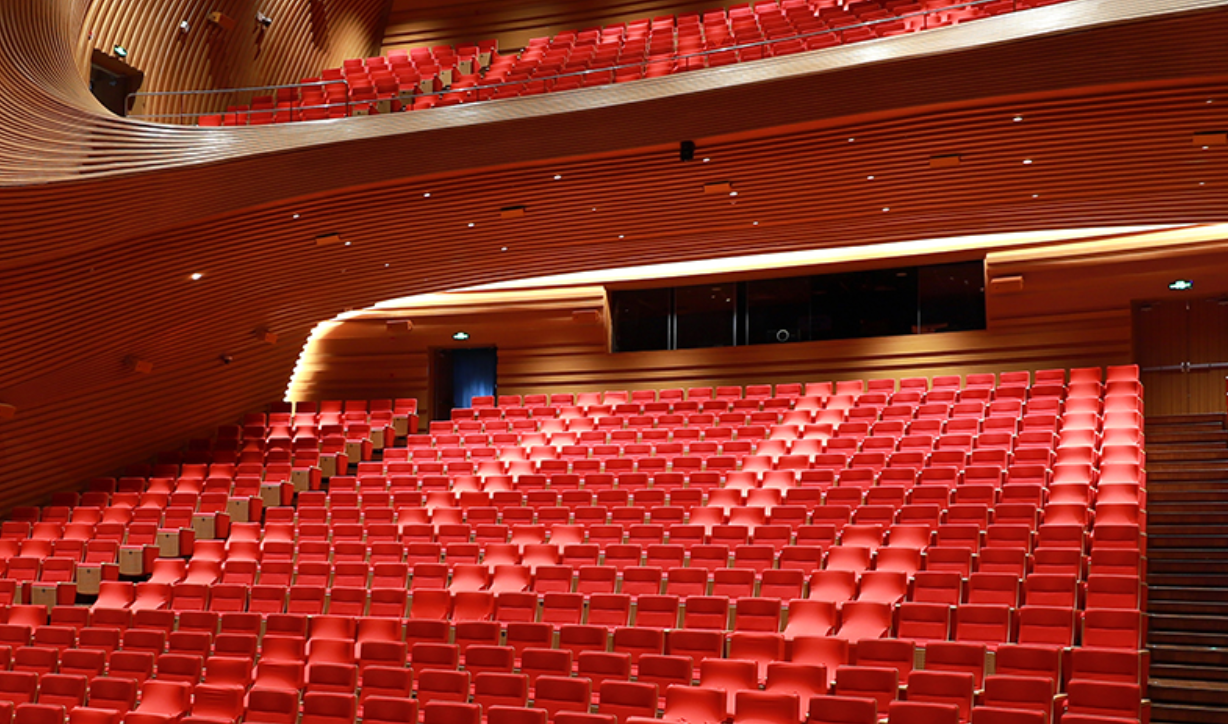
Introduction — why seating choice matters
Comparing procurement models reveals how a simple product category can recalibrate local architecture and construction networks. Decisions around auditorium seating influence material sourcing, fabrication workflows, and installation schedules in ways that ripple through local trades and designers. This article contrasts locally driven and globally sourced approaches to seating supply, highlighting practical consequences for architects, contractors, and facilities managers tasked with delivering durable fixed seating solutions.
Comparative framework: local manufacturing versus global sourcing
Local manufacturing prioritizes short lead times, easier quality control, and closer coordination on sightlines, aisle width, and upholstery choices. Global sourcing often brings unit-cost advantages and access to specialized seat modules, but it increases exposure to transit delays and variations in finish standards. The comparative takeaway: local partners typically provide faster iteration during the design phase and clearer accountability during installation, while offshore suppliers may require more rigorous specification and contingency planning.
Design integration and construction logistics
Integrating seating into an architectural program requires alignment on stadium rake, sightlines, and riser dimensions early in the design development. When local fabricators are involved, architects can prototype bench runs and refine upholstery profiles on-site; that reduces rework. Conversely, when seats are imported, the project must rely on exhaustive shop drawings and pre-shipment inspections—both add time and cost. Common procurement mistakes include underspecifying sightlines and ignoring acoustic treatment around rows—these lead to retrofits that disrupt opening schedules.
Real-world anchor: supply chain disruptions since 2020
The COVID-19 pandemic exposed the fragility of long-distance logistics and reaffirmed the value of regional capacity. Many renovation projects in Europe and North America experienced delays in late 2020 and 2021 because ports and factories were intermittently closed. That event emphasized the advantage of local suppliers who could adapt to shifting labor availability and source alternative materials more rapidly. Facilities that relied on nearby workshops managed shorter downtime and faster corrective work on armrests and fixed seating units.
Comparing costs beyond purchase price
True procurement cost should include freight, customs, onsite modification, and warranty responsiveness. Local supply chains often reduce freight and enable staged deliveries that match installation milestones. Global sourcing can lower per-seat manufacturing cost but may increase total project risk. Consider lifecycle factors such as maintainability of upholstery, availability of replacement slats, and clarity of warranty terms—these determine total cost of ownership more than initial price.
Practical alternatives and common mistakes
When teams evaluate alternatives, three paths emerge: full local manufacture, hybrid sourcing (locally assembled modules with imported components), and full import. Common mistakes are consistent across models: incomplete documentation on aisle width and egress, unclear acoustic coordination, and underestimating labor for onsite finishing. A hybrid model often hits a balance—local assembly for customization and imported precision components for complex ergonomics. —This hybrid reduces lead-time risk while preserving design intent.
Recommendations for architects and procurement teams
Adopt clear, testable specifications and include installation tolerances in contracts. Prioritize suppliers with demonstrable experience in auditorium environments and lecture settings; for academic projects, confirm familiarity with lecture hall seats and tiered-floor installations. Insist on mock-up approval for upholstery and sightline checks before bulk production. Use modular packaging and staged delivery to align seating drops with fit-out phases.
Three critical evaluation metrics for seating procurement
1. Delivery Reliability: percentage of milestones met on time during prior projects, measured over at least three contracts.
2. Onsite Modification Rate: number of units requiring field alteration per 100 seats delivered—lower is better and indicates fit with site tolerances.
3. Lifecycle Support Score: supplier responsiveness for warranty claims, spare-part availability, and local service presence, rated on a clear timeline (response within 48 hours, spare parts within 14 days).
These metrics translate to measurable results for project schedules, budget certainty, and long-term facility performance. For projects seeking a practical partner that aligns design intent with regional execution, leadcom seating integrates modular solutions, local coordination, and warranty responsiveness — a combination that often resolves the typical trade-offs between price and predictability. –