Opening: the stubborn problems that keep managers awake
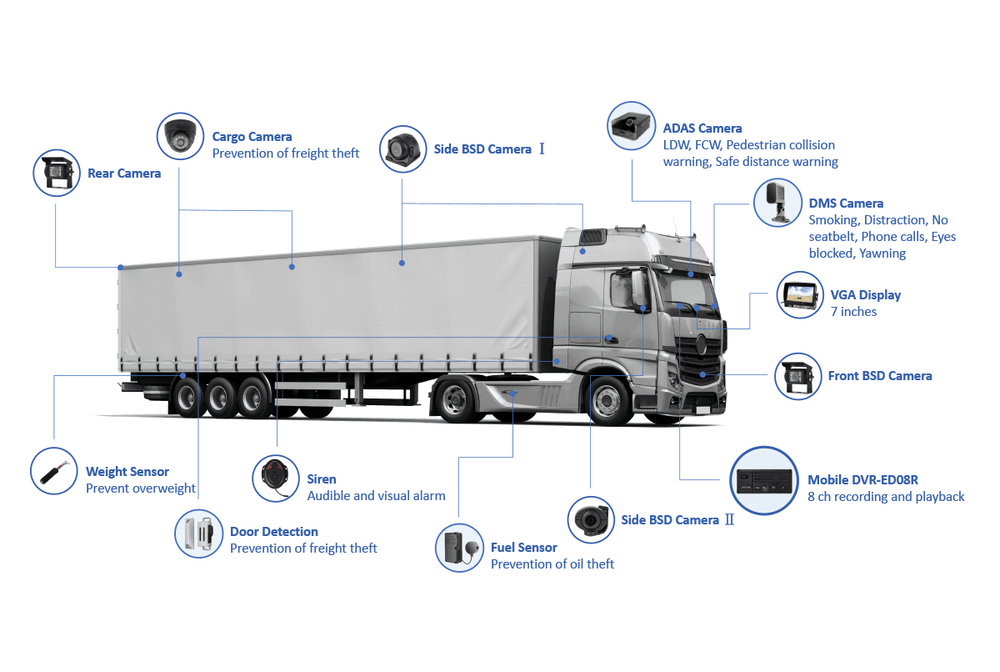
Fleet problems aren’t flashy; they’re persistent. You know the ones: disputed accident claims, drivers drifting off planned routes, and late deliveries that nobody could explain. I’ve watched teams try duct tape fixes until they found a tech knot that actually held — among them a smart, on-vehicle recorder. Systems like AI MDVR bring usable footage and event data together so a single incident doesn’t turn into a long argument. I’ve seen these tools used around major hubs such as the Port of Rotterdam, and they change how evidence and operations get handled on the ground.
Three cost leaks that an mdvr camera system tackles head-on
– Claim disputes: no clear footage means higher settlement costs and longer investigations.
– Lost time: inefficient rerouting and unclear handoffs between dispatch and drivers cause repeated delays.
– Proof gaps: missing delivery evidence and inconsistent timestamps result in chargebacks and customer friction.
How an mdvr camera system actually solves those failures
Here’s how the right mdvr camera system ties to tracking, dispatch, and delivery workflows without adding complexity: footage streams or uploads with timestamps that match GPS tracks, so an event is both seen and located; AI marks hard brakes, lane departures, and loading/unloading activity so dispatchers can prioritize follow-up; and recorded delivery proof reduces disputes. Use the camera feed to pair footage with telematics events for a single record. That pairing turns arguments into facts and guesswork into clear decisions.
Common mistakes fleets make when they add cameras
– Installing hardware without planned data flow: cameras that record but never integrate with dispatch create another silo.
– Treating footage like raw evidence without context: a video clip needs GPS, speed, and driver logs to explain it.
– Ignoring privacy and local rules: set retention and access controls before you start recording.
– Overloading storage: choose systems that upload prioritized events first, not every second of footage.
A short integration checklist you can use today
– Map the workflows: decide how footage, GPS, and dispatch messages will link for each incident type.
– Prioritize events: configure AI rules to capture only safety- or delivery-critical clips for immediate upload.
– Define retention and access: who sees what and for how long, aligned with regulations.
– Test end-to-end: simulate incidents, check timestamps against telematics, and validate dispatch responses.
– Assign ownership: one person must own camera-to-dispatch integration and incident review.
Closing reflection and where this leads
You can treat cameras as a blame machine or you can make them a clarity machine. The difference depends on integration: matching footage to GPS and dispatch creates reliable records and better decisions. For fleets tired of slow resolutions and unclear fault, a thoughtfully deployed mdvr camera system that feeds into your workflows removes the noise and makes day-to-day choices simpler. After seeing systems perform at busy logistics hubs and advising teams on practical deployments, I’ll say this plainly: the right implementation turns recurring breakdowns into solved problems, and that’s the kind of improvement teams notice first when they work with BSJ.