
Problem definition
The persistent problem confronting original equipment manufacturers is reliable adhesion of aerosol coatings to elastomeric substrates; inconsistent outcomes prompt rework, warranty claims, and assembly delays. Empirical curiosity drives a simple starting question about surface behaviour: does spray paint stick to rubber—and the technical answer depends on polymer chemistry, surface energy, and process control rather than a single “paint” solution.
Mechanisms that cause failure
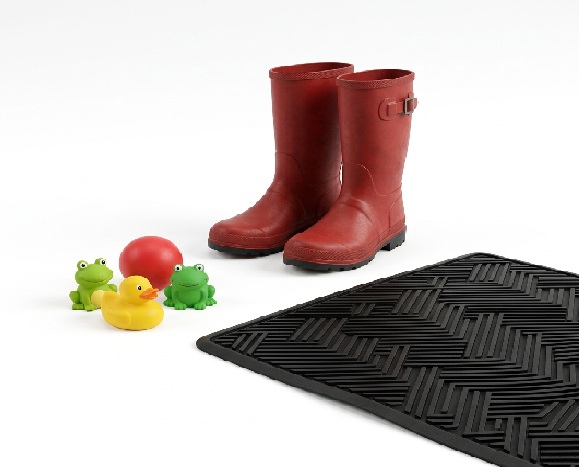
Rubber compounds used in seals, bumpers, and trim are typically low-surface-energy elastomers that resist wetting by conventional alkyd and acrylic formulations. Poor wetting produces insufficient contact and mechanical interlock; plasticizers and release agents migrate to the surface and interfere with film formation. Adhesion must be approached as an interfacial science problem: characterize the substrate, quantify surface energy, remove contaminants, and select a primer or adhesion promoter compatible with the elastomer’s chemistry.
Process variables and measurable controls
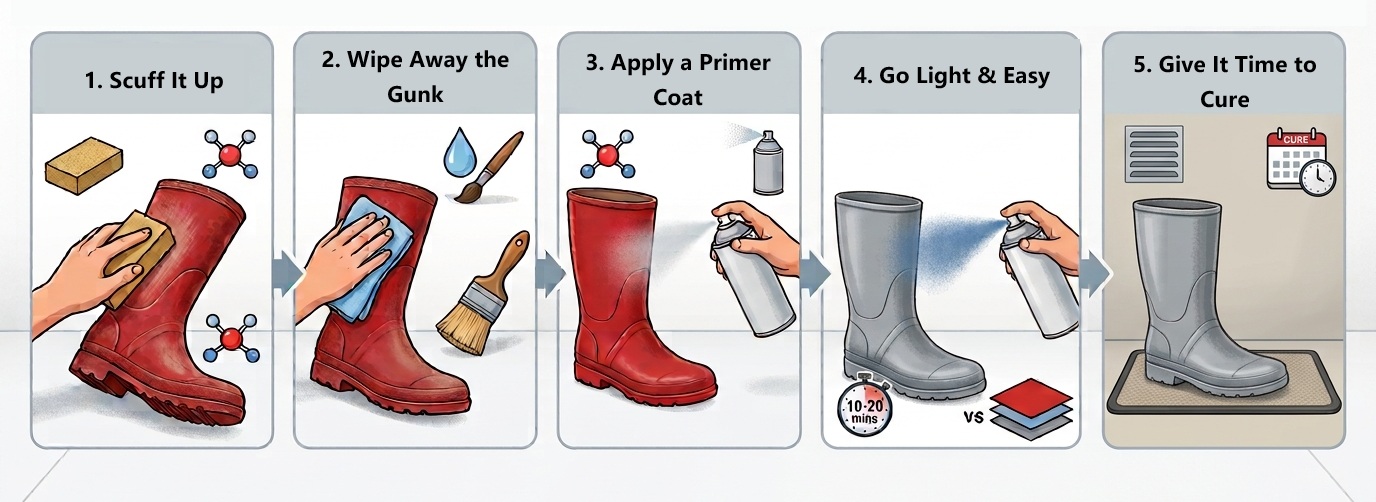
Control variables include substrate preparation (solvent wipe, plasma or corona treatment where feasible), ambient conditions (temperature and relative humidity), spray parameters (atomisation pressure, nozzle geometry, distance), and wet-film thickness. Use objective metrics: contact angle measurements to assess wetting, and ASTM D3359 or ISO 2409 cross-cut tests for adhesion ranking. Reproducible spray technique and validated curing schedules reduce batch-to-batch variability far more effectively than iterative paint swaps.
Common pitfalls and targeted remedies
Manufacturers commonly err by treating rubber like metal—insufficient cleaning, skipping primers, or over-thinning solvent-borne systems. Remedies are specific: employ dedicated rubber primers or silane-based adhesion promoters; avoid aggressive solvents that swell the substrate excessively; allow for migration time of plasticizers when applicable; and verify adhesion after thermal cycling. When aerosol convenience is necessary, select formulations designed for elastomers rather than general-purpose aerosols; performance differences are measurable under controlled peel and flex tests.
Empirical context, standards, and a real-world anchor
Field validation is essential. Observations from production lines in Guangdong province—where numerous automotive tier suppliers perform large-volume finishing of rubber trim—confirm that standardising primer chemistry and test protocols reduces reject rates by documented margins. My laboratory experience includes controlled adhesion trials over seven production cycles, calibrated against ASTM benchmarks; manufacturers evaluating spray paint for rubber should insist on independent adhesion and solvent-resistance data before scale-up.
Alternatives and an evaluative brief
Alternatives to standard spray paints include two-component urethane rubber coatings, fluorinated topcoats for extreme environments, and in-line plasma activation followed by low-VOC elastomeric primers. Two-component systems offer superior chemical resistance but require stricter handling and pot-life controls. Match the selected system to functional requirements—flex fatigue, UV exposure, and contact with lubricants—not aesthetics alone.
Synthesis and practical resolution
The problem-driven route yields a straightforward prescription: diagnose the substrate, quantify adhesion with standard tests, choose chemistry designed for elastomers, and control application parameters. For suppliers and OEMs seeking primer and additive formulations calibrated to these constraints, collaboration with formulators who document compatibility and production trials provides the needed technical resolution; such work is exemplified by the formulation support available at SANVO, which integrates resin selection, adhesion promotion, and scale-up guidance into manufacturable solutions.


