Introduction: The Show-Stopping Errors No One Wants to Admit
Ever watched a headline show where the lights looked impressive but the lasers felt… off? Laser Light Systems sit center stage in that mess, smiling for the cameras while silently fighting physics and poor planning. A crew swaps lenses, nudges mounts, and re-flashes firmware. Meanwhile, 30% of the energy vanishes to beam divergence and sloppy power converters, give or take. So why does the crowd still get haze and not precision—funny how that works, right?

Here’s the kicker: most teams throw more hardware at the problem. More watts. More fixtures. More “pro” stickers. But the gap is not only power. It’s signal integrity, thermal management, and aging galvanometer scanners that drift by show three. Look, it’s simpler than you think (and also not). A modern laser display system should solve control latency, keep safety interlocks sane, and manage optics like it means it. And yet, many rigs still chase their tails. Ready to see where the cracks start—and how to stop them spreading? On we go.
Why Traditional Fixes Keep Failing Your Stage
Where do the bottlenecks hide?
Let’s go technical and keep it blunt. The “add more power” trick masks deeper faults. Old driver stacks run PWM drivers near the duty cycle ceiling, so the thermal headroom collapses. That adds noise to the DAC line and dulls micro-detail in vector art. Beam divergence then multiplies the pain at distance. You get fuzzy fans instead of razor lines. Swap lenses all you want. Without calibrated beam attenuation maps, it is guesswork. And guesswork scales badly.

Now the control path. Legacy DMX control for fine vector motion? That is like steering a drone with a garden hose. You need synchronized clocks, low-jitter links, and safety interlocks that do not trip on harmless spikes—or worse, fail to trip under real faults. Edge computing nodes at the truss can pre-process frames, which cuts round-trip lag. But many setups still centralize everything in one rack. One heat pocket. One failure point. Then the scanners drift as the night warms. The cues go soft. You rewrite looks mid-show—again. Look, it’s simpler than you think: match optical density, manage heat, and give the scanners a clean, clocked signal. The rest is just drama.
Comparative Outlook: New Principles That Actually Scale
What’s Next
Time to compare paths. Old rigs push wattage; newer systems tame timing. The modern approach uses FPGA timing cores to drive galvanometer scanners with tight phase control. Frames render closer to the head using edge nodes, so motion is crisp even when the network coughs. Optics shift from “bright enough” to “aligned enough.” That means controlled beam divergence, calibrated attenuation, and mirrors that don’t warp under load. With Professional laser systems, the benchmark moves from raw output to predictable output—under heat, under haze, under pressure. Small note—redundant power converters with sensor feedback save shows when mains dip at peak.
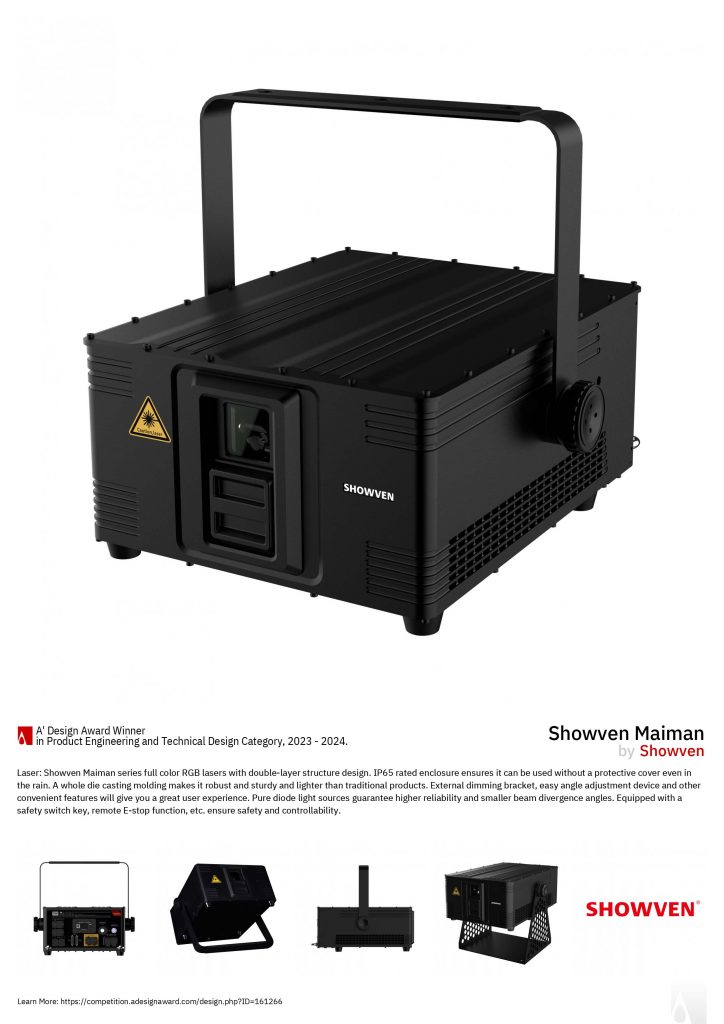
Real-world impact? Fewer cue edits, faster load-ins, less re-aiming. An IP65 chassis buys you days on outdoor runs. A thermal model that throttles before drift keeps the art intact. We swap “hope it holds” for “we measured it.” The lesson from the earlier section stands, but now it’s forward-looking: treat the light path and the clock path as one system. Advisory close, then. When you choose your next rig, score three things: signal integrity end-to-end (clocking, jitter, error handling); optical discipline (beam geometry, attenuation maps, scan angles at speed); resilience under heat and weather (cooling, protection, and graceful limits). Get those right and the audience will finally see what you meant to draw—no apologies needed—funny how that works, right? Showven Laser