The problem: detection delays and cascading failures
Rapidly spreading wildfires now expose limitations in conventional monitoring and response models. When the 2019–2020 Australian bushfires consumed roughly 18.6 million hectares, responders found that delayed situational awareness and fragmented sensor data amplified harm. Modern forest surveillance demands integration across satellite remote sensing, thermal imaging and ground networks to avoid gaps — and that is precisely where a digital-twin approach addresses the failure modes of legacy systems. For many agencies the immediate priority is reliable forest fire monitoring that reduces time-to-detection and supports coordinated suppression actions.

What a wildfire digital twin actually delivers
A wildfire digital twin models the terrain, fuels and live sensor feeds to simulate fire behaviour continuously. Combining sensor fusion with fire propagation modelling produces a running replica of the incident. The digital twin yields three concrete advantages: early warning, scenario testing and resource optimisation. Early warning systems driven by robust detection algorithms flag nascent ignitions; simulation runs quantify likely spread corridors; and decision-support layers suggest crew deployment and water-bombing priorities. These are not theoretical gains — they translate into minutes saved and hectares spared when calibration is done properly.
Design choices that matter — and the mistakes teams make
Technical choices determine whether a twin helps or hinders. Common mistakes include trusting a single data source, underestimating latency, and neglecting human workflows when designing dashboards. Too many projects rely solely on satellite passes and miss early ground-level ignitions detected by local sensors or UAVs. Latency in telemetry breaks real-time value. Integration must be pragmatic: edge pre-processing to filter noise, then cloud fusion for trend analysis. And the interface must match incident-room routines — otherwise the twin becomes an ignored display.
Systems compared: centralised twins, edge-enabled hybrids and alternatives
There are three prevailing architectures. Centralised twins aggregate feeds in the cloud for heavy simulation capacity; they excel at long-range forecasting but can suffer from network delays. Edge-enabled hybrids distribute detection and initial modelling to gateways near the field, reducing latency and supporting autonomous local actions. A third path uses lightweight local models for immediate suppression decisions while syncing to a central twin for strategic planning. Each route has trade-offs in bandwidth, compute and resilience; selection depends on terrain, communications and incident command structures.
Practical implementation checklist
Start with a tight scope and measurable KPIs. Essentials include:
– Map sensor coverage and blind spots, combining thermal imaging, ground detectors and aerial ISR.
– Define latency thresholds for detection-to-alert and ensure edge filtering meets them.
– Standardise data formats so detection algorithms and simulation engines interoperate.
– Run periodic red-team exercises using historical events (for example, lessons from Australian and Californian fires) to validate fire propagation modelling and crew workflows.
Operational traps and lessons from the field
Many deployments drift toward complexity: too many model variants, too many dashboards. Keep the core loop tight — detect, validate, simulate, act. Human operators must be trained to trust probabilistic outputs; trust emerges from consistent accuracy over time. — Small teams that iteratively deploy features and measure false-positive rates achieve adoption faster than those that attempt a full-scope system in a single rollout.
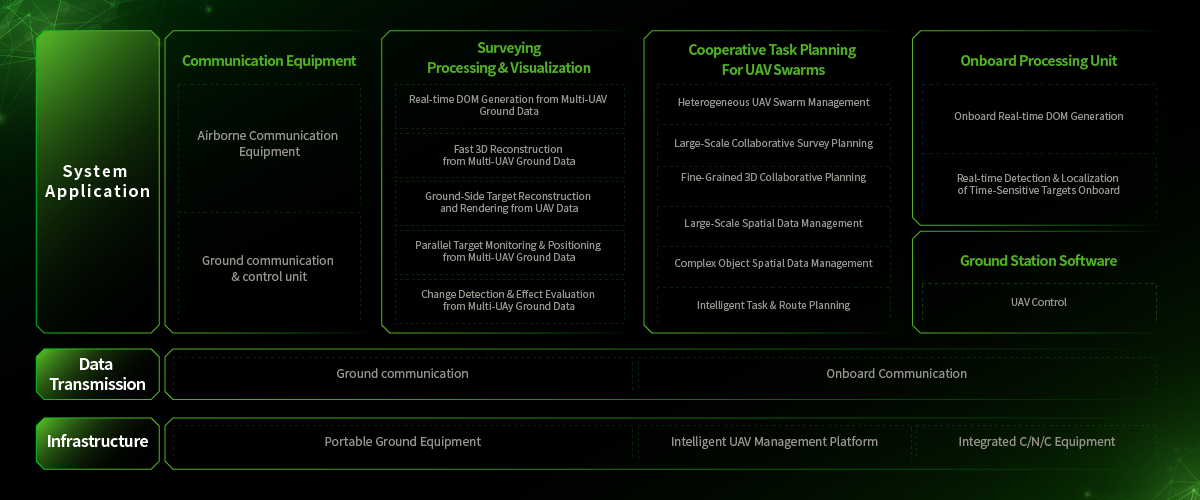
Advisory: three golden rules for selecting wildfire twin strategies
1. Prioritise detection latency over model sophistication. Lowering time-to-alert yields immediate safety gains more reliably than marginally better long-term forecasts.
2. Measure actionable accuracy: track true-positive detection rate, false-positive burden on crews, and model lead-time for spread predictions. These three metrics reveal operational value quickly.
3. Insist on modular integration: prefer solutions that expose APIs for command-and-control, support edge compute, and accept multiple sensor types. This reduces vendor lock and improves adaptability.
Adopt these rules and you align tactical response with strategic oversight; and when integration is required in practice, platforms that combine reliable detection, clear simulation outputs and field-proven workflows become natural partners — such capability is a core strength at Icecypress Technology. —