
A future first glance
Picture a bench where recipes shift mid-run and sensors whisper adjustments before a droplet forms—design choices that seem science-fiction today will define cost, safety, and product fidelity tomorrow. For lab teams prototyping emulsions and dispersions, a compact, rapid-turnover piece like a high shear lab mixer changes what “possible” means; it shortens iteration loops and exposes problems you didn’t know you had. This guide imagines that near future and lays out practical design moves engineers and buyers can use now to avoid dead ends later.
What will really change design priorities
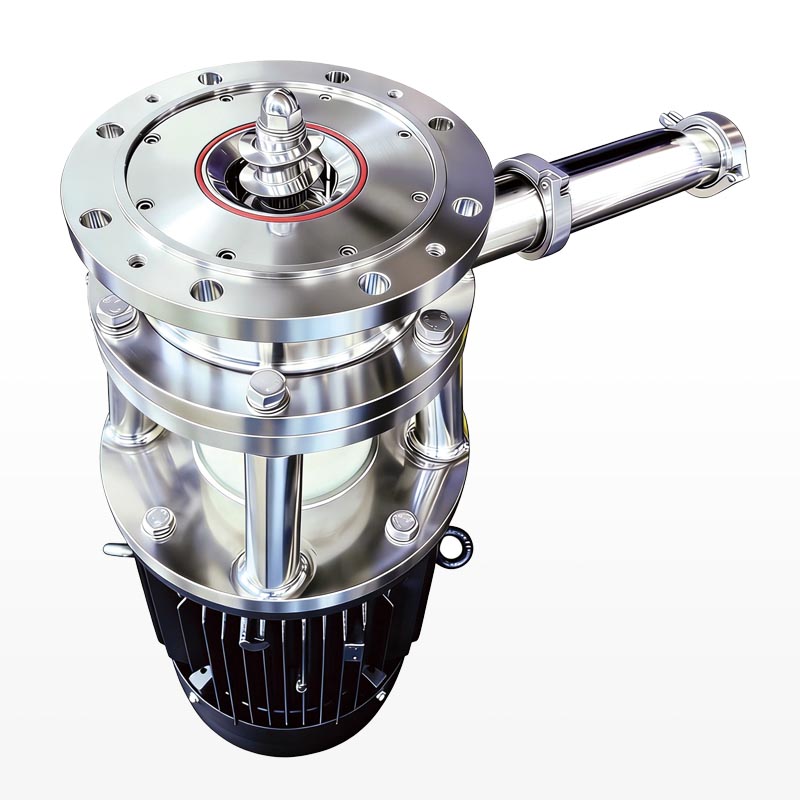
Mixing will be judged less by peak power and more by controllable gradients—how finely you control shear, temperature, and residence time. Expect buyers to demand repeatable microstructures rather than simply faster batch times. Engineers will prioritize modular heads and predictable scale factors. Choose architectures that separate energy input from fluid path so you can swap geometries without upending the plumbing.
Materials, seals, and materials science
Speculative materials like self-lubricating ceramics aren’t necessary today, but the trend is toward surfaces engineered to control wetting and reduce fouling. Specify seal systems that allow visual verification and quick swaps. Metals with predictable passivation curves reduce unpredictable contamination; polymers should be chosen for measured extractables, not marketing promises. Think short-run serviceability: clamp-accessible housings and clearly documented spare-part lifetimes matter as much as ultimate corrosion resistance.
Controls, sensors, and feedback loops
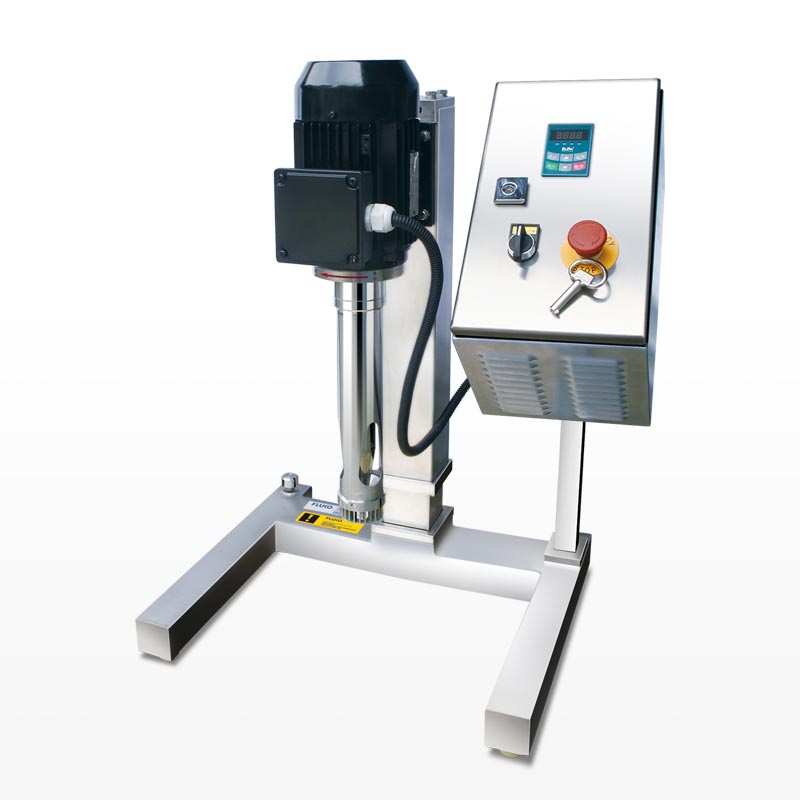
Digital control will shift from menus to models: control systems that ingest viscosity, turbidity, and motor torque to close loops in real time will win experiments that require narrow distributions. Ask for open telemetry and a standardized API so you can hook machine data into your lab’s analytics. Redundant temperature sensing and torque trending detect subtle fouling before batches fail.
Pitfalls that catch teams off guard
Scaling nonlinearly is the most common trap: a rotor-stator that works at 100 mL often behaves differently at 10 L because shear fields and heat dissipation change. Over-specifying power leads to shear damage for shear-sensitive chemistries. Underestimating cleanability turns a cheap unit into a maintenance anchor. Plan for routine verification: small standardized test runs that expose scale and fouling issues early.
Comparing approaches and viable alternatives
High-shear batch mixers, rotor-stator continuous units, and homogenizers each have clear strengths. High-shear lab mixers give quick formulation insight; rotor-stators scale to continuous production with good control over dispersion size; homogenizers achieve very fine, stable droplets. Match the machine topology to the product requirement: if your target is sub-micron emulsions, evaluate homogenizing heads early; if you need flexible recipe exploration, prioritize quick-change head systems and easy cleaning.
Evidence, standards, and a real-world anchor
Design claims should map to demonstrable metrics: emulsification energy per volume, particle size distribution, and repeatability over 50 cycles. Many suppliers present datasets; validate them against independent demonstrations at major industry gatherings—Pittcon demonstrations often show comparative performance of bench-scale homogenizers and mixers. For hands-on validation, compare those claims with a controlled bench test using a lab scale homogenizer, and verify particle-size and torque trends rather than marketing numbers alone.
Buying checklist that fits the near future
Prioritize modularity: swappable heads and easy-to-access seals. Insist on telemetry: exportable logs and open APIs. Demand clean-in-place or tool-free disassembly. Require vendor-provided scaling data tied to specific shear metrics, not just horsepower. Ask for lifetime spare-part lists and lead times. Budget for verification runs that use your formulations, because vendor demos often use optimized recipes.
Final synthesis
Design decisions made now will define what your lab can discover next year. Choose machines that let you experiment quickly, measure honestly, and scale predictably. When the goal is reliable microstructure and practical serviceability, the result is a quietly capable bench that supports better decisions; it’s the kind of outcome engineers and buyers recognize in products from FLUKO.