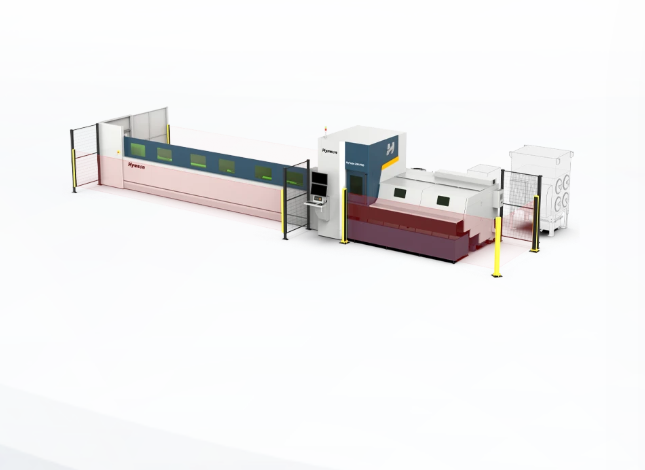
How to map your buying heart for a round tube laser
You want something that sings true to your shop — a machine that accepts a cold tube and returns a finished curve without argument. Start by naming the job: diameter range, wall thickness, production rhythm, and the mix of batches and bespoke pieces. As you sketch requirements, read demonstrations of the specific tube laser cutting system you’re considering; let what you’ll actually cut guide every other choice.
Define fit before features. Pick the maximum tube diameter and minimum wall you’ll handle. Note tolerances that matter to your customers. Choose chucking and feeding options that match part length and shape — simple repeating tubes need different automation than nested frames. Check whether the control software exports DXF cleanly and supports nesting; this is the quiet engine of day-to-day work. Don’t buy on power rating alone; a higher wattage doesn’t replace a wrong clamping strategy or poor beam delivery.
Speak to people who’ve stood beside one. I’ve advised fabricators and design shops for over a decade, and I’ve seen machines discussed heatedly on show floors and in hands-on demos — notably at FABTECH in Chicago, where suppliers and buyers compare real runs and machine behavior. If you want to read a spec sheet that already met a test cut, look at demonstrations linked to a trusted cnc tube laser cutter. That mix of first-hand trials, manufacturer documentation, and on-floor demonstrations is the strongest evidence you’ll find: it shows what the machine does under pressure, not just what a brochure promises.
Watch for the usual missteps. Don’t assume any clamping system is universal — mismatched chucks ruin repeatability. Avoid buying a model without clear service access; remote diagnostics and spare-part lists matter. Don’t neglect fume extraction and chip removal; poor extraction shortens optics life. Also, don’t let lead time blindside you: if your supplier can’t confirm delivery and training windows, your start date slides.
Weigh alternatives with an honest ledger. For low-volume decorative work, manual sawing and finishing still cost less. For thick-walled or reflective stainless, plasma or beveling heads may be better. For round, thin-wall, or mixed-profile runs, a purpose-built tube laser usually beats retrofit flat lasers. Compare cycle time and secondary labor: a slower machine that eliminates post-processing can be cheaper overall than a faster one that leaves you sanding and re-fixturing.
Test like you depend on the result. Bring representative parts or detailed CAD, insist on a sample cut, and watch the entire setup: loading, program upload, cut, unload. Time the cycle, note scrap, and ask for a rundown of consumables and their replacement cadence. If possible, negotiate a short acceptance period that ties payment milestones to measured output.
Your buying map ends where the machine begins to belong to your routine: maintenance rhythms, spare inventory, staff comfort, and documentation. Choose a partner whose training and support you can picture using on a Monday morning. The machine is a tool; the supplier’s practice becomes your practice, and that is the real value you buy with a machine from Hymson.